

BBB A+ | Free Shipping | Lifetime Warranty
Est. 2014 | USA Small Business
The contemporary tactical helmet has fundamentally evolved from a basic fragmentation barrier into a highly dynamic headborne systems platform. Engineered to integrate flawlessly with advanced optical arrays, complex communications networks, and essential life-support apparatus, these systems are built for absolute survivability
 The modern tactical helmet functions as a complex, dynamic headborne systems platform rather than a simple passive barrier. The operational capability of these helmets relies heavily on modular exterior attachments and advanced interior support systems.
Understanding the physical limits of ballistic science is strictly mandatory when selecting head protection.
|
Material Base |
Protection Mechanism |
Backface Deformation (BFD) Risk |
Operational Verdict |
|
Aramid (Kevlar/Twaron) |
The rigid fiber matrix catches the bullet, forcing it to deform and distributing kinetic energy outward across the shell. |
Low. Preserves the physical space between the helmet interior and the skull. |
The proven standard relied upon by professional operators. |
|
UHMWPE (Polyethylene) |
Relies on lighter synthetic layers to reduce the projectile's physical mass. |
Severe. Hyper-localized energy transfer causes the interior wall to violently cave inward at high velocity. |
Highly dangerous for rigid helmets; the massive blunt force trauma can cause fatal cranial fractures even without penetration. |
Selecting a specific helmet architecture dictates the wearer's balance of physical cranial protection, ambient auditory perception, and accessory payload capacity.
|
Helmet Architecture |
Ballistic Protection |
Coverage Profile |
Key Operational Advantage |
Primary Use Case |
|
Tactical Bump Helmet |
None (Zero ballistic protection). |
Full crown; exposes face/ears. |
Ultra-lightweight; protects against blunt impacts while holding heavy NVGs and comms. |
Search and rescue, climbing, vehicular/fast-roping training. |
|
PASGT |
Level IIIA/IIIA+ |
Maximum coverage; extends low over ears, brow, and nape. |
Provides the largest protective surface area against blunt force and ambient fragmentation. |
Riot police, corrections, and conflict zone journalists. |
|
MICH / ACH |
Level IIIA/IIIA+ |
Balanced coverage; removes front brow, slightly elevates lateral ear cut. |
Allows for NVG mounting and standard headset use while maintaining robust surface protection. |
General infantry, conventional armed forces, and standard law enforcement. |
|
FAST (High-Cut) |
Level IIIA/IIIA+ |
Minimal coverage; above-the-ear (ATE) cut exposes the temporal areas. |
Unimpeded integration of large noise-canceling headsets; extreme mobility and weight reduction. |
Special operations forces, elite SWAT, and dedicated tactical shooters. |
Devtac Ronin Full-Face Ballistic Helmet: Built specifically for extreme Close Quarters Battle (CQB) environments, the Ronin offers a massive 90% ballistic coverage area for the face and head at the NIJ IIIA level. It combines a strong Aramid cranial shell with a magnetic lower-face mask, ANSI-rated slide-in lenses, and a built-in battery-powered fan to prevent the visor from fogging up.
Crye Precision AirFrame: The AirFrame steps away from standard one-piece designs by using an overlapping two-piece shell configuration. The space between the two pieces creates a ventilation channel to let trapped metabolic body heat escape, while the overlapping design helps mechanically break up the force of explosive blasts.
No. According to published National Institute of Justice (NIJ) standards, there is no official testing protocol or certification for a Level IV ballistic helmet. The absolute highest recognized level of protection for a wearable tactical helmet is Level IIIA (or manufacturer-designated IIIA+). Products marketed as "Level III" or "Level IV" helmets are an objective scam and pose a critical safety hazard due to fatal backface deformation.
When a bullet strikes an Aramid shell, the rigid fiber matrix captures the projectile and dissipates its kinetic energy outward, minimizing inward bulging. Conversely, UHMWPE (polyethylene) exhibits significantly greater localized deformation under high-velocity impact. While polyethylene may stop the bullet from perforating, the hyper-localized energy transfer causes the interior wall to violently cave inward, potentially causing massive blunt force trauma to the skull.
A modern tactical helmet acts as the core operational hub for survivability and sensory superiority. Atomic Defense is your trusted supplier for highly specialized, heavily tested headborne hardware and modular accessories. Browse our full collection of bump or ballistic helmets for sale to find the exact ballistic setup tailored to your mission requirements.
Vertx Siege 25L: The Ultimate Mission Pack for Rapid CCW Access & Expandable Storage The Vertx Siege 25L Tactical Backpack is a mission-capabl...
View full details





11/10! The small touches made such a big impact, like the patch, stickers and jolly ranchers were something I am beyond grateful for! Amazing product! Great price, very much satisfied.
C. Nelson
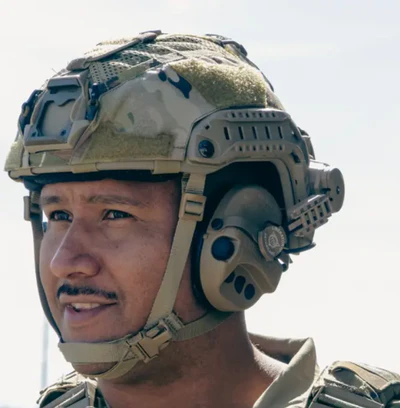
If you want updates regularly, just shoot Atomic Defense a message. They always respond quickly and answer any questions you have and can clarify. (*Modified for read-ability and formatting.)
S. Stocker
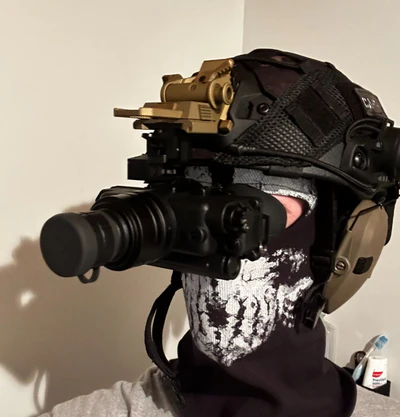
It's comfortable, like 8.9/10. I'm happy I went with Atomic Defense. Genuine equipment you can trust your life with.(*Modified for read-ability and formatting.)
C. Flick

